




Key Takeaways
- Vendor Finance improves cash flow by helping businesses pay suppliers on time.
- Registered businesses with genuine supplier transactions are more likely to qualify.
- Keep all documents ready, including GST, PAN, invoices, bank statements, and KYC.
- Complete and accurate applications help speed up approval.
- Avoid missing documents and incorrect details to prevent delays.
Managing supplier payments while maintaining healthy cash flow can be challenging, especially when businesses need to procure inventory or raw materials before generating revenue. To overcome this funding gap, Vendor Finance offers working capital to allow for supplier payments, helping businesses to operate without financial stress.
While Vendor financing may provide a liquidity boost and enhance the relationship with the supplier, approval is not automatic. Before lending credit, financing providers will evaluate several criteria such as business stability, financial condition, and transaction history. Having the necessary paperwork ready in advance can help companies navigate the application process more smoothly and increase their likelihood of getting approved for funding as quickly as possible.
What is Vendor Finance?
Vendor finance is a working capital option for businesses to obtain financing for purchases from vendors. Businesses receive the money from a financing provider, payment to suppliers is made on time, and the businesses manage cash flow better, without paying the entire sum upfront.
Who Can Apply for Vendor Finance?
While each financing provider will have its own specific criteria, most businesses are evaluated according to their legal status, business history, financial performance, and supplier interactions.
- Registered Businesses
The majority of financing providers need the candidate to be a legally registered business. Typically, proprietorships, partnerships, LLPs, private limited companies, and eligible MSMEs can qualify, and the provider’s eligibility criteria must be met, with the appropriate statutory registrations.
- Businesses with Genuine Supplier Transactions
There should be valid supplier invoices or confirmed purchase orders to show actual sales or purchases. Financing providers usually review these documents to ensure that the funding is going towards real procurement activities and not for unrelated business expenses.
- Established Business Operations
A regular operating history provides a more positive impression for businesses. Responsible and efficient financing capabilities can be demonstrated through stable business operations, regular procurement activity, and a history of delivered commercial commitments.
- Satisfactory Financial Profile
Financing providers examine a business’s cash flow, banking history, and available financial records to comprehend the company’s ability to repay. Good financial planning and clear tracking can enhance an application and help to expedite funding decisions.
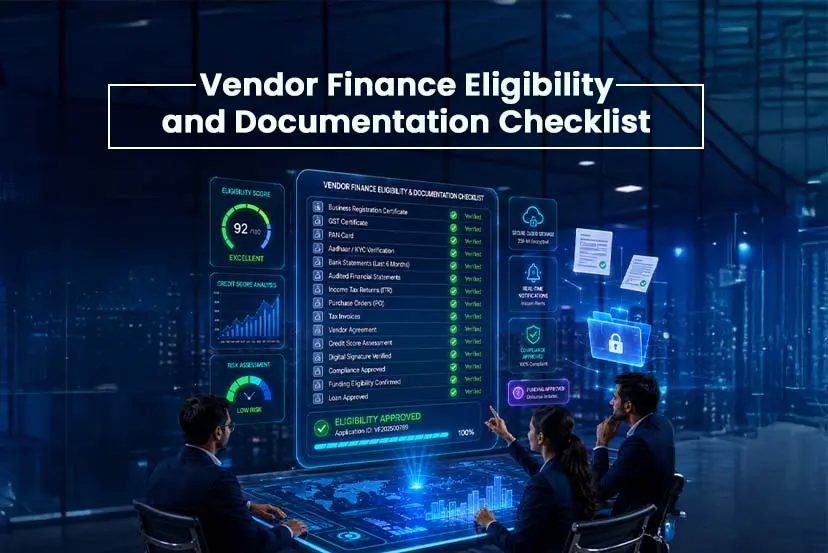
Vendor Finance Documentation Checklist
Organizing the required paperwork before applying can reduce processing delays and improve the overall Vendor Finance approval experience.
- Business Registration Documents
Businesses should provide registration certificates or incorporation documents that establish their legal identity. These documents help verify the organisation’s structure and business status during the financing assessment.
- GST Registration and PAN
A valid GST registration and Permanent Account Number (PAN) are commonly required to verify tax compliance and identify the business applying for financing. These documents also support financial due diligence during the application process.
- Purchase Orders or Supplier Invoices
Copies of confirmed purchase orders or supplier invoices demonstrate the commercial transaction requiring financing. These records help the financing provider understand the purpose of the funding and assess the value of the supplier payment.
- Bank Statements
recent bank statements are helpful in understanding the business transactions, cash flow, and financial stability. Banking work is examined to get the financial position of the financing provider and the capacity to repay.
- Financial Statements
Financial statements, such as profit and loss statements and balance sheets, which may be audited or management statements, might be requested from businesses. These documents provide financial stability and performance assessment information to financing providers and enable cash flow management for the long-term.
- KYC Documents
Know Your Customer (KYC documents) include documents to confirm the identity of the business and its authorized representatives. These can vary based on the financing provider, but usually include identity proof, address proof, and authorized signatory documents. Having the right KYC paperwork will enable regulatory compliance and expedite the verification procedure.
- Additional Supporting Documents
Businesses may be asked to submit other documentation depending on the type of transaction and financing evaluation, such as supplier agreements, business licences, ownership records, and other supporting documentation. A completed vendor finance application with all required documents may help to avoid follow-up and approval delays.
How to Improve Your Chances of Vendor Finance Approval
- Transparent business transactions, up-to-date accounting records, and well-organized financial statements allow financing providers to make more informed decisions. Maintaining up-to-date financial information also minimizes the number of extra paperwork requests during the evaluation process.
- One of the top reasons for Vendor Finance delays is incomplete applications. Checking all paperwork prior to submission and verifying the accuracy of invoices, registrations, and supporting documentation can make for more efficient processing.
- Regular supplier payments and long-term business relationships indicate business stability. Consistent procurement is seen as a positive sign of successful business operations and transaction authenticity by financing sources.
- Keeping all registrations and tax filings current and keeping up with the continuous GST compliance is a sign of good business management. Compliance records that are up to date tend to make it easier to complete the financing assessment process.
Common Reasons Vendor Finance Applications Get Delayed
Applying for a loan carries some common pitfalls, and being aware of them can aid in smoother loan applications.
- Incomplete or no Vendor Finance documentation.
- Incorrect business registration or tax information.
- Unconfirmed suppliers’ invoices or missing purchase orders.
- Banking information that is no longer up to date or inconsistent.
- When a company has pending statutory or compliance needs.
By preparing their borrowers to meet these requirements before the application process, the borrower can minimize time spent processing the loan, and the overall financing experience will be better.
Being Prepared Speeds Up Vendor Finance Approval
The key to a successful Vendor Finance application is good preparation. Companies that are well-versed in the criteria, have organized records, and keep their finances in order are more prepared to obtain financing with minimal delays.
The issuance of necessary documents in advance and the periodic review of compliance with this legislation by companies help to facilitate the process of obtaining approval, improve relations with their suppliers, and secure business loans more easily when needed.
How Credlix Simplifies Vendor Finance for Businesses
Working capital availability should be easy, clear, and in line with business needs. Credlix provides digital Vendor Finance solutions that facilitate business funding of supplier payments with a simple onboarding and documentation procedure. Through digital processes, speedy approval, and flexible working capital solutions, Credlix empowers companies to enhance supplier relationships, boost liquidity and manage procurement needs better with confidence, while maximizing sustainable business growth.
FAQs
Who is eligible for Vendor Finance?
Vendor Finance is usually open to businesses that are legally registered, have a valid supplier transaction, accurate financial records and meet the eligibility requirements of the financing provider. It can also take into account credit history, cash flow, banking history, statutory history and the overall credit history of both the business and the suppliers.
What documents are needed for Vendor Finance?
Business registration documents, GST registration, PAN, purchase orders or supplier invoices, recent bank statements, financial statements, KYC documents and other documents that the financing provider may request are typical documents required for a Vendor Finance application. Ensuring that the submitted paperwork is filled out correctly and fully can help to decrease the time it takes to process and increase the chances of approval.
Can MSMEs apply for Vendor Finance?
Yes. Most of the MSMEs are eligible for Vendor finance, which would depend on the criteria laid down by the financing institution. For businesses that have developed strong vendor relationships and transactions with sound financial statements, vendor financing can help bolster working capital and help keep businesses running efficiently