




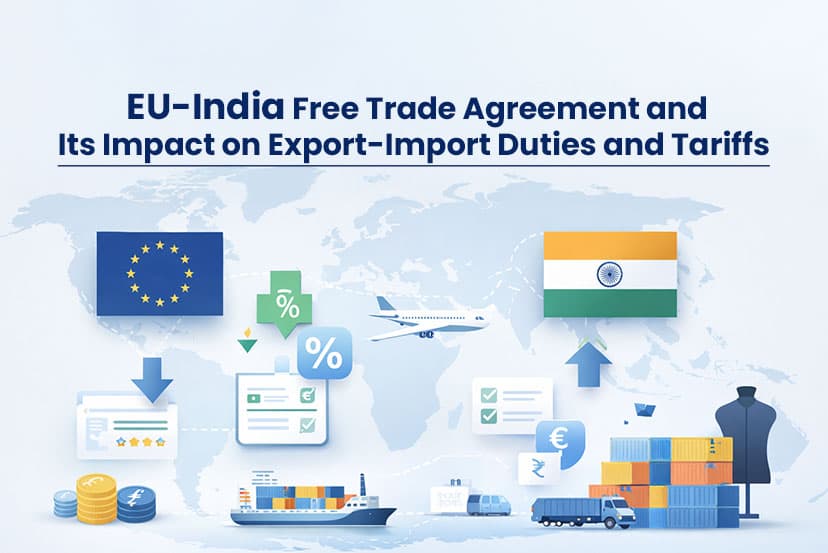
The ongoing conversation on the India-EU free trade agreement has been in the limelight for several reasons, creating buzz around the internet due to its ambitious and strategic cooperation between both regions. One of the core aspects of this “mother of all deals” focuses on reducing the import-export duties and rationalizing the previous tariff structures, which have been a wider hurdle for deeper trade integration. However, both parties are currently analyzing the complete scenario, and are likely to be implemented by 2027 or 2028 after every technical review and rectification by India and EU member states.
Under this proposed trade agreement, around 30% of products imported from the European Union will fall into zero import duties once the agreement is implemented. Furthermore, according to the EU officials, the tariff will either be removed or significantly reduced over time on nearly 96.6% of EU exports to India. This desirable step estimates the reduction of duty payments, approximately $4.74 billion annually.
Once implemented, the EU-India FTA is expected to transform the bilateral trade by improving global competitiveness, lowering import-export duties, and providing deeper access to each other’s markets. Let’s have a quick look on India-EU Free Trade Agreement Summary and insights, which can be beneficial for every trader.
Current Trade and Tariff Scenario Between India and the EU
Even after a strong trade relationship between India and the European Union states, both regions face substantial tariff and non-tariff hurdles. Being one of the largest trading partners, the trade potential still faces some loopholes and is underutilized due to high customs duties and compliance complexities.
Existing Tariff Challenges
- Indian exporters trading textiles, marine goods, leather products, garments, and processed food generally face traffic and compliance issues.
- On the other hand, EU exports in India are subject to high import duties, especially in automobiles (up to 110%), medical devices, wines and spirits, and dairy products.
- Due to major variations in custom procedures, certification, and standards, it increases the compliance cost and complexity.
The current traffic structure brings out the product price inflation, which impacts the demand and poses a high risk for small exporters entering each other’s markets.
What are the Key Objectives of the India-EU FTA?
As discussed above, one of the prime objectives of the India-EU trade agreement is to eliminate or reduce the customs duties, helping importers and exporters to enter the international market effortlessly and lower risk. The agreement between the two states is expected to cover:
- Automobile custom and import duties
- Agriculture and processed food items
- Technology-driven products
- Industrial goods
- Raw materials and intermediate inputs
What are the Expected Changes in Export-Import Duties?
Under the complete framework of this mother of all deals between India and the EU, it is likely to implement the following changes in traffic policy, which include:
- The reduction or even elimination of import duties is expected on various tariff protocols and lines.
- Decrement of duties on industrial products and capital goods.
- Elevating the transparency in the entire traffic schedules and structures.
- Comprehensive and simplified custom regulation and better clearance procedures.
- Preferential tariff treatment for originating goods.
Once implemented, the factors and measures will reduce the landed costs, enhance supply chain efficiency, and become more competitive in establishing a successful business.
Understand the Impact on Indian Exports to the European Union
Under the Free Trade Agreement between India and the European Union, Indian exporters are likely to be the biggest beneficiaries with reduced tariffs and increased access to the EU’s large and high-income consumer market.
Key Export Sectors to Benefit
- Textiles and Apparel: Reduced duty or even duty-free access on these products will improve the competitiveness against countries like Bangladesh and Vietnam.
- Pharmaceuticals and Chemicals: New regulations, compliance, and lower tariffs on medical and chemical products will improve the sustainable growth of generic medicines and Active pharmaceutical ingredients.
- Engineering Goods and Auto Components: Comprehensive and improved access to the market, trading with machinery parts, industrial equipments and technology tools.
- Agriculture and Processed Foods: A major relief for food exporters, opening new opportunities to trade rice, spices, tea, and coffee to European regions.
What will be the Impact on Indian Importers?
As European exporters will be benefited with this trade agreement, similarly, Indian importers will grab the opportunity with both hands. With reduced import tariffs, European exporters can target consumers effortlessly, while Indian importers will have better control over import duties and simplified customs protocols.
Major Import Categories Affected
- Automobiles and Auto Parts: The reduction of import duties from 110% to 40% in the automobile sector will create new opportunities in establishing horizons in the Indian market with EV adoptions, healthy competition, and technology cooperations.
- Medical Devices and Healthcare Equipment: The decreased duties will improve the health care technology with affordable resources and solutions.
- Wines, Spirits, and Specialty Foods: The reduced tariff will improve the import of premium alcohols and spirits with targeted consumer choice.
- Renewable Energy and Green Technology: The FTA will improve the transition to Indian clean energy.
Benefits for MSMEs and Small Exporters
The Free Trade Agreement between India and the EU not only focuses on large enterprises, but also is expected to impact MSMEs, most of which struggle in managing the higher export and import costs. The FTA will assist in various ways, such as:
- The reduction in import and export duties will reduce the overall transaction and trade costs.
- Opening new opportunities to enter the EU market and target the specific segment of consumers with predictable tariff regimes.
- Improving the participation in global value chains
- Increasing the percentage of profitability and scale of operation
Conclusion: A Long-Term Economic and Trade Impact
Focusing on every specific aspect, the mother of all deals benefits in the long run for both Indian and European states. It will not only boost the trade volume but also enhance the supply chain, attract new and higher FDI, and improve the Indian contribution to globalizing trade networks. By reducing customs duties, eliminating tariff barriers, revamping the regulatory system, and simplifying compliance complexities, the EU-India free trade agreement will create new opportunities for exporters and importers of both large businesses and MSMEs. The market will be a new and simplified version for long-term trade benefits, transforming business trades and achieving milestones in India’s global trade.
Frequently Asked Questions
Ques: When is the EU–India Free Trade Agreement expected to be implemented?
The Indian-EU free trade agreement is expected to be implemented by 2027 or 2028, which will showcase a significant reduction in import and export duties on various products.
Ques: How will the India-EU FTA impact the textile and apparel industry?
The India-EU FTA is expected to significantly reduce or eliminate import duties on Indian textiles and apparel entering the European Union. The current import duty is 8% to 12%, which is expected to be reduced to 0% or phased elimination over 3-7 years.
Ques: What changes can the automobile and auto components industry expect under the India-EU FTA?
The automobile and auto components sector will likely see a phased reduction in import-export duties. The current indian import duty for CBUs is upto 110%, and for auto parts is 10-20%. The expected reduction in CBU is upto 40%, and in auto parts is 0%.
Ques: How will the India-EU FTA affect pharmaceutical and medical device exports?
Under the FTA, pharmaceutical products and medical devices are expected to benefit from lower tariffs and improved regulatory cooperation. The current tariff ranges form 0% to 10% based on various products, which is expected to be a zero-duty access.