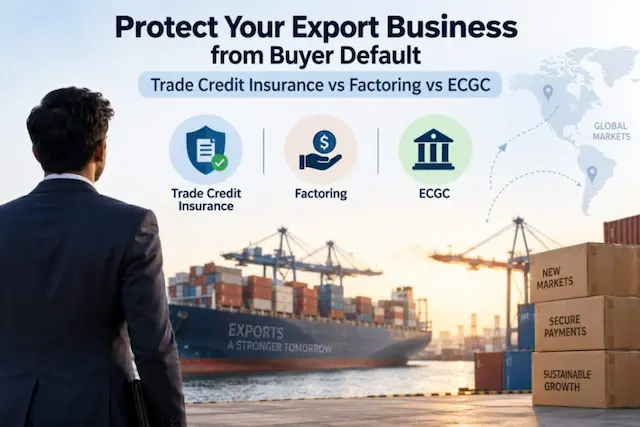






A single misjudgment of a payment in international trade may destroy months of profit. The exporters pay much attention to the logistics and documents. But they ignore one of the greatest risks–whether the buyer will pay or not. To ensure cash flow, minimize disputes and maintain long-term export expansion, it is imperative to learn how to verify buyer creditworthiness before shipment.
This guide states the practical, real-world approaches exporters can consider to evaluate buyer creditworthiness, mainly when trading with overseas customers, new markets or high-value shipments.
Why Buyer Creditworthiness Matters in Export Trade
Export business entails long credit duration, inter-country legal issues, and foreign exchange threats. Recovery is made slow and costly in the event of a default by a buyer. That is why the management of export buyer credit risks should start before the shipment of goods leaves your warehouse.
An organized credit check can assist the exporters:
- Avoid payment defaults
- Bargain with more secure payment conditions.
- Establish the timing of factors or credit insurance.
- Have a stable cash flow.
Failure to take credit checks seriously tends to create bad debts, poor banking relationships, and stress on working capital.
Step 1: Conduct Basic Buyer Due Diligence
Exporters need to begin with buyer due diligence in exports before shipping. This would include checking the legitimacy of the buyer.
Key checks include:
- Registration information of the company.
- Years in operation
- Checking of physical addresses and contacts.
- Proprietorship and capital organization.
- Industry reputation
The red flags, like vague addresses or inconsistency in communication, are even simple signs to indicate high risk when undertaking international buyer risk evaluation.
Step 2: Perform a Credit Check for International Buyers
International buyers are served by a professional credit check that gives a hint about the financial health and the payment habits of a buyer.
They usually contain the following in reports:
- Credit score or rating
- History of payment to the suppliers
- Outstanding liabilities
- Legal disputes or bankruptcy files
- Country-specific risk indicators
With such reports, trade credit risks are enhanced and enable exporters to establish reasonable credit limits.
Step 3: Analyze Payment History and Trade References
One of the best predictors of future payment is past behavior. The exporters should request trade references and study:
- Average payment delays
- Frequency of disputes
- History of partial or renegotiated payments.
This measure improves the creditworthiness of buyers, particularly during increased order volumes by repeat buyers. While trustworthy customers are also likely to continue with their payment to suppliers.
Step 4: Evaluate Country and Market Risk
Buyer risk does not exist in isolation. The payment reliability is influenced by political instability, foreign exchange restrictions and economic downturns.
When learning how to verify overseas buyers, exporters must consider:
- Country credit ratings
- Import regulations
- Currency convertible risk
- Commercial contracts enforcement
Such a broader setting can be helpful in terms of managing the export payment risk, particularly when it comes to exports to the emerging or high-volatility markets.
Step 5: Review Contract Terms and Payment Structures
Even creditworthy buyers may end up defaulting if the terms of the contracts are not well-drafted. Exporters are supposed to match the payment terms with the buyer’s risks.
Best practices include:
- Reduced credit durations amongst new buyers.
- Pre-payments on risky areas.
- Milestone-based invoicing
- Effective dispute resolution provisions.
The measures minimize exposure during buyer credit checks for exporters, especially on high-value consignments.
Step 6: Monitor Buyer Behavior Continuously
Creditworthiness is not static. A reputable buyer who was reliable last year could be having financial strain presently.
Ongoing monitoring supports international buyer risk evaluation by tracking–
- Sudden order spikes
- Applications of long credit.
- Delayed communication
- Constant renegotiations of payment.
Constant surveillance will enable the exporters to take immediate actions before the risks develop into defaults.
Step 7: Use Trade Finance Tools to Mitigate Risk
Exporters are not to depend on buyer promises only after having done due diligence. Trade finance facilities are important in minimizing the credit risk of buyers for exports.
Common tools include:
- Export factoring
- Credit insurance
- Alternatives to a letter of credit.
- Invoice discounting
These solutions turn receivables into instant cash and transfer payment risk to another party other than the exporter.
Common Mistakes Exporters Make in Buyer Credit Checks
Most of the exporters weaken trade credit risk assessment by:
- Trusting verbal assurances
- Forgiving official credit reports
- Giving too much credit to secure business
- Disregarding the initial indications.
- Relying on bank references only
These errors are avoided to manage the export payment risk and stabilize the working capital.
How Creditworthy Buyers Enable Business Growth
In cases where the exporters make regular shipments to known consumers:
- Cash cycles shorten
- Financing costs reduce
- Financiers and banks are also assured
- Scale becomes predictable
An excellent buyer creditworthiness assessment is a direct way to enhance profitability and operational strength.
Building a Safer Export Business Through Credit Checks
The exporters dealing in competitive markets in the global market no longer have the choice of learning how to evaluate buyer creditworthiness before shipping. Organized due diligence, professional credit reports, continuous monitoring, as well as intelligent application of the trade finance tools, all minimize payment uncertainty. Implementing credit checks in the export business will ensure that businesses secure their cash flow, enhance bargaining strength and develop a more sustainable form of international trade.
Credlix assists exporters by integrating buyer credit assessment with different receivables financing. Credlix provides businesses with an opportunity to access working capital by using both buyer payment schedules and data-based risk evaluation and export factoring solutions. Credlix assists the exporters in mitigating the risk of payment and smoothing their cash flows. The team also assist in expanding their confidence in the international markets by financing invoices from trusted buyers.
FAQs–
Q1. When should exporters check the creditworthiness of buyers before shipping?
In an ideal scenario, credit checks will be done before the finalization of payment terms or safe shipment, particularly when dealing with a first-time buyer or a big order.
Q2. Are small exporters capable of paying for international buyer credit checks?
Yes. The buyer credit check of exporters can be easily available even to MSMEs since most credit agencies and factoring platforms provide affordable reports.
Q3. Can buyer creditworthiness prevent default in export payments?
No. Although they are essential, credit checks should be supplemented with good contracts, monitoring, and trade finance devices to have full coverage of the export payment risk.