



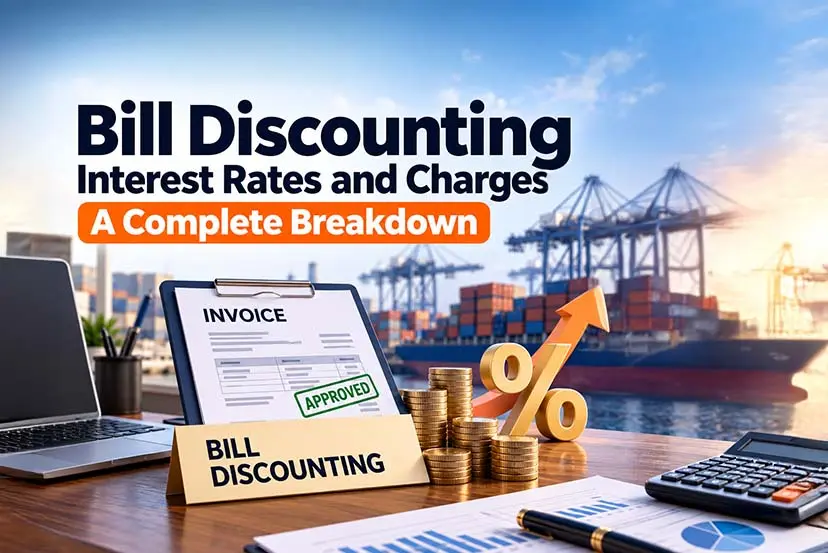
Bill discounting can give businesses access to cash before customers pay their outstanding bills. However, the total amount received in advance will not be equivalent to the full amount of the bill. The final amount received may be influenced by interest, processing fees, collection charges, taxes and other charges that may apply.
Knowing the bill discounting interest rates is therefore only half the story when assessing the facility. Businesses also have to understand how the interest is calculated, the extra bill discounting charges, what can impact the rate and how they can compare two financing offers to their actual cost.
What is Bill Discounting?
Bill discounting is a short-term financing service where the financial institution provides funds to the business before the term of the bill. Deducts any interest and fees from the financing amount.
What Determines Bill Discounting Interest Rates?
No single business or transaction will have the same bill discounting interest rate. The terms of the rate offered may change depending on the financing institution’s evaluation of the business, the buyer, the bill and the nature of the financing transaction.
Several factors can impact pricing:
- Business credit profile: Financial strength and repayment history may impact the risk assessment.
- Buyer creditworthiness: The buyer’s ability and history can impact the financing assessment.
- Bill tenor: The length of time until the bill is paid; the longer the time, the more time the financing will be outstanding.
- Transaction quality: Financial institutions might determine the authenticity and validity of the underlying transaction and documents.
- Financing relationship: The financier’s internal credit policy and repayment record may also affect the terms, as do existing limits.
Banks are required to have their own bill financing policies and must determine the credit needed and the underlying commercial transaction prior to discounting eligible bills.
How Is Bill Discounting Interest Calculated?
The financing cost generally depends on the bill amount, applicable annualised rate, and the period for which funds are provided.
For example, consider a bill of Rs. 10 lakh with a 12% annualised rate and a 90-day financing period.
Approximate interest:
₹10,00,000 × 12% × 90 ÷ 365 = ₹29,589
The business would thus get less than Rs. 10 lakh after deducting the interest applicable and other charges.
Actual calculation may differ based on the pricing system, terms, and products of the financier. This is why businesses should not just consider the annual interest rate, but calculate the total bill discounting cost before they take an offer.
Bill Discounting Charges Beyond Interest
Interest is often the biggest financing charge, but it is not always the only finance charge. Other fees include, but are not limited to:
- Processing charges
- Negotiation charges
- Collection charges
- Foster Documentation or service charges
- Out-of-pocket expenses
- Applicable taxes
- Charges for late or unpaid bills as applicable
In certain bill-discounting transactions, for instance, bank charges for negotiation, collection, and out-of-pocket costs are separately listed in bank schedules, as are interest charges. Depending on the transaction and financing arrangement, the charges are different.
Interest Rate vs. Total Bill Discounting Cost
The rate indicated in the quote is the financing rate, and it does not guarantee that the total cost of the facility will be the same.
| Cost | What it represents |
| Interest | Cost of using the funds for the financing period |
| Processing charge | Fee associated with processing the financing |
| Negotiation charge | Charge that may apply when the bill is negotiated or discounted |
| Collection charge | Fee associated with collection of the bill |
| Other expenses | Applicable transaction-related expenses |
| Taxes | Taxes charged on relevant fees or services |
What Can Increase the Cost of Bill Discounting?
The final cost may change if the financing duration, risk or charges are adjusted.
- Extended terms of payment: If they are not paid back for a longer period of time, the interest rate may be raised.
- Greater credit risk: If the credit profile of a business or buyer is less strong, it results in a financing agreement that is different.
- Documentation issues: Poor transaction documentation may impact the financing process and may need further verification.
- Delayed payment: If the bill is not paid as scheduled, then the financing agreement may provide a different interest treatment or additional charges.
It is important because the underlying transaction and supporting documents are important for the financier, who is expected to establish the genuineness of transactions when buying or discounting bills.
How to Compare Two Bill Discounting Offers
Just comparing the interest rate can be misleading. When deciding on a facility, businesses should verify:
- Quoted annualized interest or discount rate
- Actual financing period
- Total interest payable
- Processing and other applicable charges
- Net amount received
- Conditions that apply when the bill is late.
- Recourse or repayment obligations
- Any minimum or fixed charges
For instance, a particular financier may have a lower interest rate but also higher processing and collection fees, so the difference in the headline rate might not be lower.
The best comparison is between the sum of what is paid for financing and the sum of what is received in net funds.
Documents That Can Affect Bill Discounting
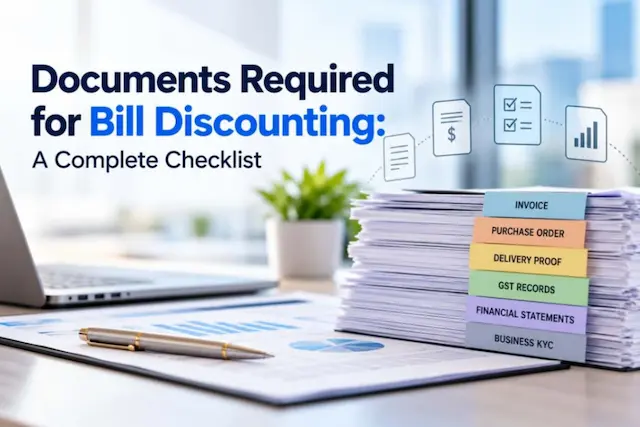
A financier may require documents that establish the business, buyer, and underlying transaction. These can include:
- Invoice or bill
- Purchase order
- Buyer acceptance, where required
- Delivery or service documents
- Business KYC
- Banking information
- Financial information
- Supporting transaction records
Complete and consistent records are helpful to the financier in evaluating the receivable and the underlying transaction.
Making Bill Discounting More Cost-Transparent With Credlix
The benefits of bill discounting aren’t just about getting the money sooner. Businesses also must be aware of the cost of financing and the working capital they have access to. Credlix offers sales bill discounting for domestic invoices, with financing available for eligible invoices with payment periods of up to 120 days. The platform targets businesses to help them liquidate funds that are stuck in their receivables, as long as they meet the qualifications and financing criteria.
When considering the facility for a business, the crucial question is the same: What is the money available, how much does it cost, and how does the cost fit in with the anticipated cash-flow cycle?
Calculate the Real Cost Before Discounting a Bill
If you’re considering accepting any bill discounting financing, calculate the interest for the financing period and include all applicable fees and taxes. Compare the total cost with the net funds that are going to reach the business.
A full grasp of the total cost can aid businesses in making use of bill discounting as a working-capital tool without being led away by the key expenses involved that can influence the finance choice.
FAQs
What is the typical bill discounting interest rate?
There is no single bill discounting interest rate applicable to every business. Pricing might differ depending on the credit profile of the business and buyer, tenor of the bills, quality of transaction, the policy of the financier, and other risk factors. Rather than simply the standard market rate, businesses should estimate the total financing cost.
What charges are included in bill discounting?
Bill discounting charges may consist of interest plus processing, negotiation, collection, documentation, out-of-pocket expenses, and applicable taxes, depending on the financier and transaction. Some agreements may also include extra fees if a bill is late. Charges, if any, must be confirmed prior to the acceptance of financing.
How can businesses reduce bill discounting costs?
Businesses can attempt to control bill discounting costs by keeping financial records, having dependable buyers, ensuring that the documents of transactions are accurate, and comparing the total cost of various financing offers. A shorter financing time could also lower the interest component if the buyer is anticipated to pay sooner.