




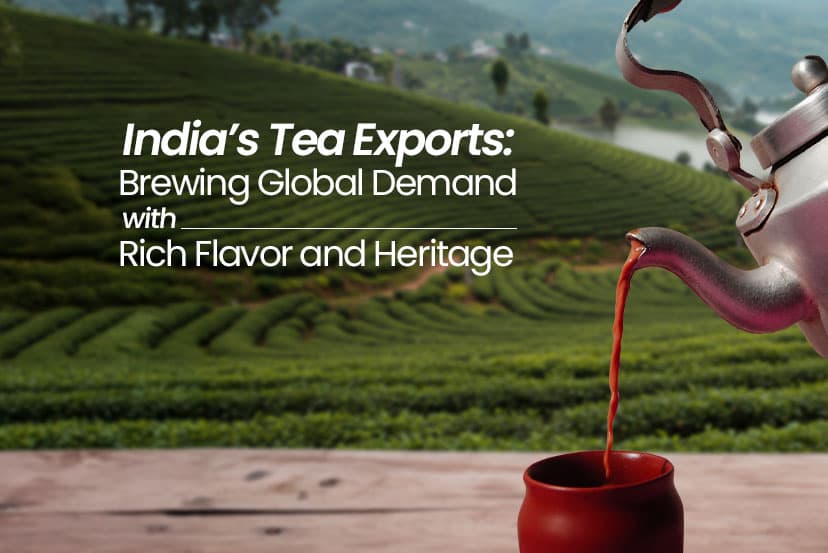
Tea is not just a beverage in India; it is a kind of tradition, hospitality, and has also gained popularity internationally. Indian tea is renowned for its distinctive aroma, deep color, and varied taste; it remains one of India’s most iconic exports. By 2025, when the world is becoming health-conscious and keen on having specialty teas, the volume of tea exports in India will have an even larger impact on the global economy.
This blog examines the existing environment, new markets, major challenges, and opportunities of Indian tea in the global landscape.
India’s Role in the Global Tea Trade
To understand the growth drivers for the tea trade, it’s essential to understand the position of India in international tea exportation.
India Among the World’s Top Tea Exporters
India ranks among the leading five tea exporters in the world. During 2023-24, India’s shipments of tea exports were approximately. 230 million kilos to a range of over 100 countries. These involve black tea, green tea, instant tea, and herbal infusions, which are extracted in regions as Assam, Darjeeling, Nilgiri, and Dooars.
Tea export constitutes a significant proportion of the agricultural export earnings of India, and demonstrates volume and heritage.
Leading Export Destinations
The exportations of tea produced in India are shipped to these countries-
- Russia, Iran, and UAE (CTC and orthodox teas)
- UK, USA, and Germany (specialty and organic teas)
- Japan and China (in the case of green and wellness teas)
These markets value Indian tea not only because of its taste, but also due to its traceability and cultural attractiveness.
Key Trends Shaping India’s Tea Export Growth
The tea exporters are evolving according to world preferences and innovations.
Shift Toward Specialty and Wellness Teas
A shift in demand can be seen worldwide for herbal, organic, and functional teas. Tulsi, ginger, ashwagandha, and green tea blends provided by Indian exporters are picking up popularity among consumers who care about their health in Europe and North America.
This is the type of diversification beyond black tea that is aiding in improving the exports of tea produced in India to the high-end markets.
Rise of Branded and Packaged Tea
Although the bulk tea is still commanding much of the shipment, interest is mounting in the retail-packaged, branded Indian teas. Exporters from B2C businesses with labelled products get improved profitability and customer retention, particularly via Internet marketplaces and specialty shops.
Individualisation and custom blending are also coming to the aid of the small and medium exporters.
Sustainability and Ethical Sourcing
Consumers across the globe have begun to demand tea that is manufactured by the use of sustainable methods that emphasise fair compensation and eco-friendly agricultural processes. To meet these demands, Indian exporters are changing Rainforest Alliance and Free Trade certifications, which effectively increases their access to high-value contracts and shops.
Government Support and Trade Incentives
The tea exporters are gaining growth due to the supporting policies.
Schemes and Subsidies for Exporters
Government schemes for the benefit of exporters of tea include:
- Remission of duties and taxes on exported products (RoDTEP)
- Transport and Marketing Assistance (TMA)
- Incentive in quality testing, packaging, and trade fair presentation at the international fair by the Tea Board of India
These reduce the cost of exporting and expose the Indian tea brands to the world.
India’s Bilateral Trade Agreements
Free trade agreements with the Middle East, ASEAN, African region result in a reduction in tariffs, thereby rendering the export of tea in these regions to be more competitive. Exporters can strategise in the form of expansion to these regions and establish long-term buyer networks.
Challenges Facing Indian Tea Exporters
Although the outlook is optimistic, there are several challenges affecting export performance.
Price Sensitivity in Bulk Markets
Some of the key importers, such as Egypt, Russia, and Kazakhstan, are assertive in price negotiations. The challenge is handling competition with an increased cost of labor, logistics and inputs while also not risking quality.
Climate-Linked Disruptions
In some regions like Assam and Darjeeling, there are highly erratic weather conditions that have serious effects tea crop. This influences supply stability and order supply fulfilment timelines to foreign clients.
Quality Compliance and Testing
The exporters are under an obligation to observe several standards in every country, including pesticide residue, moisture content, and labelling. Failing to comply could lead to rejection or prohibitions in the EU and USA markets.
Growth Opportunities in Global Markets
Here are the insights on the major growth avenues in the tea exports of India, despite the challenges-
Demand from Health-Conscious Consumers
Indian exporters are well placed with the increasing popularity of green and functional teas. Tulsi green tea or products with turmeric infusion attract the contemporary wellness purchasers in particular U.S., Germany, and Japan.
African and ASEAN Group Market expansion
Africa and Southeast Asia are among the countries that have experienced a surge in tea imports due to high population rates, particularly in urban areas, and rising income levels. Indian CTC and flavored teas are affordable and flavorful, and meet the local taste preferences.
Direct-to-Consumer (D2C) Exports
As e-commerce and international Logistics solutions expanded, Indian tea brands are currently sending directly to consumers in the U.S., UK, and Canada. D2C creates higher profit and control on packaging, pricing, and branding.
A Rich Heritage Steeped in Global Opportunity
The tea production in India is based on quality and variety, as well as the heritage of tea export. By 2025-26, the nation would be in a strong position to serve both traditional and new markets: through its growing specialty tea and the use of more sustainable processes, and through trade efforts directly supported by the government. Innovation, conformity, and branding by exporters will start the next wave of Indian global performance in the tea business.
At Credlix, we give tea exporters the financial guidance to grow, from working capital to purchase and invoice discounting, or the help of payment cycles. With our digital platform, you can spend your time concentrating on your craft without having to worry about keeping an eye on your cash flow.