




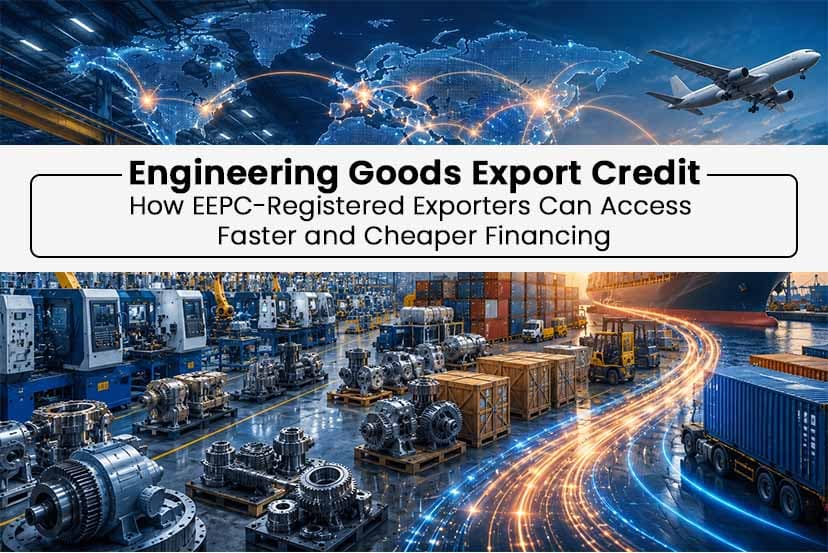
The Indian engineering industry remains the country’s top export contributor, supplying products ranging from industrial machinery to automotive parts, electrical equipment, fabricated metal goods, and capital goods. Engineering goods exports are creating tremendous opportunities for Indian manufacturers to expand into overseas markets, as global supply chains continue to diversify and demand for engineering goods shifts. But growth in export markets often requires businesses to commit substantial resources long before payments are received.
For a large number of EEPC exporters, financing has become an increasingly significant aspect that determines the effective competitiveness in international markets. Exporters are expected to adhere to the production schedules, maintain the availability of inventory, manage the procurement needs, and fulfill delivery obligations while dealing with long buyer payment cycles. The availability of timely export credit and effective export financing in this context can have an impact on not only liquidity but also competitiveness, customer relationships, and future business development.
What is Export Credit In Engineering Exports?
Export credits refer to financing solutions that can be used to assist exporters in funding various activities in international trade before payment from the importers is received. Various types of engineering export finance can be provided to enable businesses to access working capital, which can be utilized for procurement, production, inventory management, and export execution.
Why Financing Often Influences Export Competitiveness?
Global customers are now assessing suppliers on their consistency, quickness to respond to shifting demand, and reliable production capacity. Export competitiveness is thus promoted by more than just product quality or price. Firms that can place orders efficiently can have a distinct edge in the global marketplace. For engineering goods exports, this can be especially applicable if there are complex production needs or high order values.
Exporters are required to bear a huge operational cost without waiting for payment. Funding is necessary for procurement, manufacturing commitment, logistics, and inventory management throughout the export process. Having reliable access to working capital is crucial for exporters to make sure they meet changing global buyer demands and take advantage of growth prospects.
The Hidden Costs Of Slow Financing
In addition to impacting cash flow, financing delays could have other implications. They have the potential to directly affect the capability of an exporter to secure and execute international orders.
- Procurement Delays
Specialized materials, components, and supplier networks are often used by many engineering exporters to complete orders. The lack of funds can cause a delay in procurement plans and disrupt export order execution, making it harder to fulfill production deadlines and customer expectations.
- Production Bottlenecks
Lack of liquidity can present problems in the manufacturing business. A company may struggle to sustain its production process or control its workforce without adequate manufacturing working capital.
- Missed Business Opportunities
Export markets are dynamic, where buyers will prefer suppliers who can respond quickly. Focusing on export growth opportunities that may develop or bidding for larger contracts, which may require high capital outlays, may be limited due to a lack of funding.
- Pricing Pressure
The total cost of export financing may also have an effect on competitiveness. High costs inherent in financing structures could impact margins, pricing flexibility, and market competitiveness in price-sensitive international markets.
Why EEPC-Registered Exporters May Have An Advantage?
EEPC membership registration often serves as more than an industry affiliation. It can enhance the credibility of the export system and highlight the financing options.
- Industry Recognition
Many EEPC exporters benefit from the export promotion ecosystem that supports the development of the export industry. This acknowledgement can help contribute to better market credibility.
- Export Ecosystem Access
Being involved in the export environment can also raise awareness of available engineering export finance solutions. It also includes industry trends and export programs that can help businesses grow and expand overseas.
- Better Market Readiness
Companies actively involved in the engineering sector exports may be more likely to have the insight necessary to grasp the export markets’ needs, expectations, and operating issues.
- Improved Funding Awareness
Businesses can benefit from industry networks and export resources that can assist in finding the right export financing options. It also helps in making better funding decisions and consistent with their growth goals.
What Exporters Should Look For In A Financing Partner
Selecting the right financing partner requires evaluating several factors beyond funding availability alone.
- Speed Of Funding
The true success of fast export financing is dependent on the speed at which the exporter can access funds when opportunities arise. Delayed financing may have an impact on procurement, production planning, and shipment schedules.
- Financing Costs
When considering low-cost export credit, exporters should consider the overall value of the solution and not the funding-only availability. Competitive financing structures can help ensure that the margins are protected and long-term profitability is enhanced.
- Scalability
With an increase in the volume of orders, the amount of financing may also grow. Effective export growth financing solutions should be able to facilitate the growth of businesses without imposing operational restrictions.
- Export Industry Understanding
Providers with expertise in engineering export finance could be more likely to grasp industry-specific needs. It includes production cycles and export procedures.
- Flexibility
Various businesses have different funding requirements. Flexible working capital solutions can help exporters align financing with operational realities and evolving market conditions.
Building Financial Agility In A Competitive Export Environment
Being able to access efficient export credit is becoming a competitive advantage in the global marketplace. Companies that can access capital promptly are better equipped to meet customer needs and capitalize on growth opportunities in foreign markets.
For EEPC exporters, financial agility has an impact on aspects such as procurement planning, production capacity, customer relationships, and even long-term business expansion. The nature of engineering goods exports continues to shift, and exporters with operational excellence and smarter financing strategies might be a better fit to improve their global competitiveness.
Credlix: Accelerating Export Growth Through Working Capital
For many exporters, growth is dependent on how quickly working capital can be mobilized when new orders arrive. Liquidity tied up in outstanding receivables can be released, and unpaid invoices can be turned into instantly usable funds with the help of the technology-driven trade finance solutions offered by Credlix. Credlix offers export receivables financing, helping exporters manage their working capital better, gain visibility of cash flows, and aid quicker decision-making. This enables engineering exporters to concentrate on production, procurement, customer commitments, and expansion opportunities without being constrained by an extended payment cycle. This enables businesses to be more responsive to market demand and have increased financial agility.
FAQs
What is export credit in engineering exports?
Export credit is a financing solution that helps exporters provide financing for activities such as procurement, production, and inventory before receiving payment from overseas buyers.
Are there any special finance solutions for EEPC-registered exporters?
Yes. EEPC-registered exporters can avail themselves of different types of export financing options depending on their business needs, transaction profile, and financing requirements.
Why is financing speed important for exporters?
Improved funding access can enable exporters to obtain materials. It also helps to keep production schedules on track and be more responsive to growth opportunities