




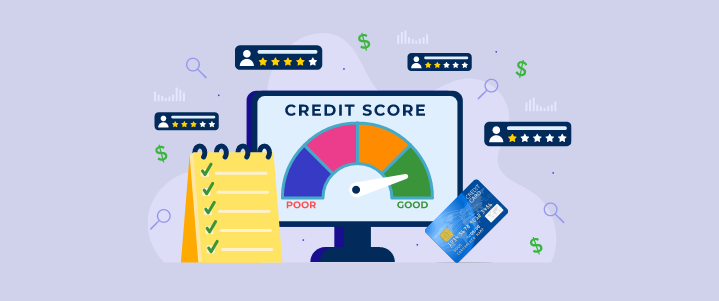
Credit cards are not just for shopping; some people use them as a powerful tool for building a credit score and as backup funds during emergencies. People often use them so carelessly, but too much dependence on this tool can also easily damage your CIBIL score. Just like how your score first drops when you apply for a new credit card. If it gets too low, you will face difficulty in getting future approvals on new cards and loans.
There are various factors that affect your score, constantly changing it every day. There is so much to know about how credit cards affect your CIBIL score, and this blog reveals all about it, including the exact score range for approvals, healthy utilization limit, and much more.
How Does a Credit Card Affect Your CIBIL Score?
Your credit card activities are communicated to CIBIL every month by your lender. Thus, your score changes as per the key data points, for better or worse. Here’s the complete list of positive and negative effects of your credit card on your CIBIL score:
| Positive Impacts | How It Helps |
| On-time payments | Paying bills on time consistently helps build a strong credit score. |
| Low credit utilization | Using a small portion of your credit limit shows responsible credit management. |
| Longer credit history | A longer history of responsible credit use can strengthen your score. |
| Healthy credit mix | Managing both credit cards and loans responsibly shows you can handle different types of credit. |
| Negative Impacts | How It Hurts |
| Missed or late payments | Late payments can significantly lower your score and remain on your credit report for years. |
| High credit utilization | Using a large portion of your credit limit can signal financial stress. |
| Too many hard inquiries | Multiple credit applications in a short period can temporarily lower your score. |
| Defaults or settlements | Defaults and settlements can have serious, long-term effects on your creditworthiness. |
5 Major Factors That Affect Your CIBIL Score
Here are the five major factors based on which your CIBIL score is affected negatively or positively:
| Factor | Approximate Weightage | What It Measures |
| Payment History | 35% | Whether you pay bills/EMIs on time |
| Credit Utilization | 30% | How much of your available credit you’re using |
| Credit History Length | 15% | How long you’ve held credit accounts |
| Credit Mix | 10% | Balance between secured and unsecured credit |
| New Credit Inquiries | 10% | How often you’ve applied for new credit recently |
These five major pillars will help you to know how you have utilized your credit card, so that your CIBIL score either has improved or dropped drastically.
What is the Minimum CIBIL Score You Need for Credit Card Approval?
Lenders immediately refer to your CIBIL score when you apply for a credit card, using it as a benchmark to forward your application towards approval or cancellation. Here’s what a specific CIBIL score range means about the approval chances of your card:
| CIBIL Score Range | Category | Credit Card Approval Chances |
| 300-549 | Poor | Very low; may only qualify for secured cards |
| 550-649 | Fair | Limited approval chances; basic/entry-level cards only |
| 650-749 | Good | Reasonable approval odds for standard cards |
| 750-900 | Excellent | High approval odds, including premium/rewards cards |
Minimum CIBIL Score Requirement for Different Card Types
Basic/entry-level cards: Most lenders can approve your card request when your score ranges between 650-700. It would also be good if you already have an account or relationship with the lender.
Premium/rewards/travel cards: You will need a 750+ credit score along with good income documents.
Secured credit cards: Approved against a fixed deposit, these cards require little to no minimum score requirements.
Can You Get a Credit Card With No CIBIL Score or Credit History?
Yes, when you are a first-time applicant, the lenders cannot assess the risk with your score. So they approve your request when:
- You apply for a secured credit card against a fixed deposit.
- You have a salary account with the bank. They can give you a salary-based card offer.
- Your family member already has a credit card, and you apply for an add-on card. The member will share the credit limit with you.
Does Applying for Multiple Credit Cards Hurt Your CIBIL Score?
Yes, applying for multiple credit cards in a short span of time either with a single or multiple lenders will affect your CIBlL score negatively. It shows too much dependency on credit and increased risk of missing repayments.
Here’s how different situations affect your CIBIL score:
| Situation | Impact on CIBIL Score | Why? |
| Applying for 1 credit card | Low impact | A single hard inquiry usually has a limited effect. |
| Applying for 2-3 cards within a short period | Moderate impact | Multiple hard inquiries may signal frequent credit-seeking behavior. |
| Applying for several cards at once | Higher potential impact | Too many inquiries in a short time can make you appear credit-dependent. |
| Applying for cards at longer intervals | Lower impact | Spacing applications gives your credit profile time to stabilize. |
| Comparing cards without applying | No impact | Checking offers generally does not affect your CIBIL Score. |
| Getting rejected for a credit card | Indirect impact | The rejection itself does not lower your score, but the hard inquiry from the application can have a temporary effect. |
| Holding multiple cards but paying on time | Can be positive | Responsible use and timely payments can help build a stronger credit history. |
| Multiple cards with high balances | Negative impact | High credit utilization can lower your CIBIL Score even if payments are made on time. |
Conclusion
A credit card can improve your credit score or damage it based on how you use it. Factors such as paying bills on time, keeping credit utilization low, maintaining old accounts, and not applying for new cards frequently will help you to build a strong CIBIL score. Whereas, if you miss payments, use too much of your limit, or apply for multiple cards in a short time, your score will definitely tank.
However, you should also understand that only having a good CIBIL score does not guarantee your credit card approval. The lenders also consider your income, existing debts, repayment history, and their own internal policies. If you use your credit card carefully and apply for it only when you need one, then it can become a powerful tool to build a strong credit profile and a reliable source of funds for emergencies.