




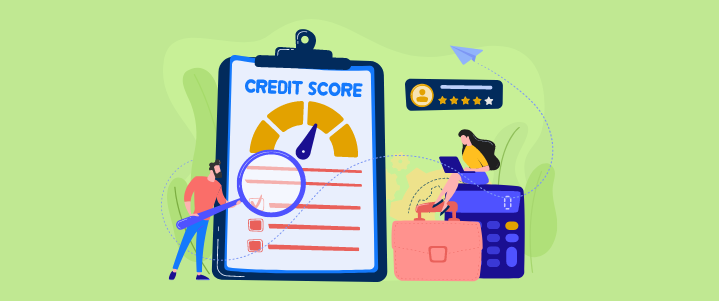
Most people think about checking their credit score when their loan or credit card application gets rejected. They search for different methods to check the score and ways to improve it. However, by then, it’s too late. Their application gets rejected, and a hard inquiry is also marked on their credit report. Also, if they apply for it many times with multiple lenders, their credit score will tank even lower.
Keeping track of your credit score is essential for an individual to opt for financial products like a business loan, home loan, or a personal loan when facing economic difficulties. Maintaining a healthy score results in faster approvals and instant availability of funds.
There are several ways to check your credit score, and a detailed report consists of your entire credit history. It takes only five minutes to check it at no cost. However, most commonly, users want to know how they can check their credit score using their PAN cards.
What Is a Credit Score, and Why Does PAN Matter?
A credit score is a rating that defines the creditworthiness of a person, given my reputed credit bureaus in every country. The credit score ranges between 300 and 900, and the closer it is to the higher value, the better loan offers a person gets, with lower interest rates and faster approvals. In India, TransUnion CIBIL (Credit Information Bureau India Limited), Experian, Equifax, and CRIF High Mark are the major credit bureaus that provide credit ratings to every individual. When the TransUnion CIBIL provides a credit rating that is called a CIBIL score, which most individuals are familiar with.
Your PAN, or Permanent Account Number, is the basic requirement for the credit bureaus to provide you with a credit rating. They know all about your credit history using this number. Every credit activity is registered against your PAN, reported by the relevant banks and NBFCs.
Step-by-Step Guide: How to Check Your Credit Score Using PAN
CIBIL (TransUnion CIBIL)
CIBIL is the oldest and most widely used credit bureau in India, and checking your score here is free.
- Go to the official CIBIL website.
- Click “Get Your Free CIBIL Score.”
- Enter your PAN number, full name, date of birth, and gender.
- Add your mobile number and email address for verification.
- Complete the OTP verification.
- View your score and download your report.
Experian
- Visit Experian India’s website.
- Look for the free credit score/report option.
- Enter your PAN, name, date of birth, and contact details.
- Verify via OTP.
- View your Experian score.
Equifax
- Go to the Equifax India website.
- Select the free credit report option.
- Fill in your PAN, personal details, and contact information.
- Verify your identity with OTP.
- Access your score and report.
Equifax uses a slightly different range (1 to 999) compared to the other three bureaus, so keep that in mind when comparing scores.
CRIF High Mark
- Visit the CRIF High Mark website.
- Choose the free credit score check.
- Submit your PAN, name, date of birth, and contact details.
- Complete OTP verification.
- View your score.
CIBIL vs Experian vs Equifax vs CRIF High Mark: Which Bureau Should You Check With?
All the four bureaus are India’s top organisations licensed by RBI, which every lender reports to.
|
Bureau |
Score Range |
Commonly Used By |
Free Report |
|
CIBIL |
300-900 |
Most private and public sector banks (default choice) |
1 per year |
|
Experian |
300-850 |
Private banks and fintech lenders |
1 per year |
|
Equifax |
1-999 |
Select banks, smaller footprint in India |
1 per year |
|
CRIF High Mark |
300-900 |
NBFCs and microfinance institutions |
1 per year |
What Different Credit Score Ranges Mean?
|
Score Range |
Rating |
What It Means |
|
750–900 |
Excellent |
High chances of approval and low interest rates |
|
700–749 |
Good |
Likely approval, decent terms |
|
650–699 |
Fair |
Approval possible, but terms may be less favourable |
|
550–649 |
Poor |
Higher risk of rejection or high interest rates |
|
Below 550 |
Bad |
Difficult to get approved without improving your profile first |
Does Checking Your Credit Score Affect It Negatively?
No, checking your own credit score from any official platform or third-party app does not affect it negatively.
When you check your own credit score, it is marked as a soft inquiry, which has a neutral effect on your score. There are many apps that let you check it daily, weekly, and yearly.
So, when does it affect the score? After a hard inquiry. When you apply for a loan or credit card, the lender pulls your credit report from one of the major bureaus, resulting in a hard inquiry, which affects your score negatively, irrespective of whether your application is rejected or approved.
Conclusion
Checking your credit score using your PAN is a very simple and easy way to track it. It is essential to keep your financial health in check. Four major credit bureaus assign you a credit score, such as CIBIL, Experian, Equifax, or CRIF High Mark, and from their official platform you can check your score using your PAN. Regularly checking your credit score does not harm it, and tracking it will only help you find out errors and take essential steps to improve it.